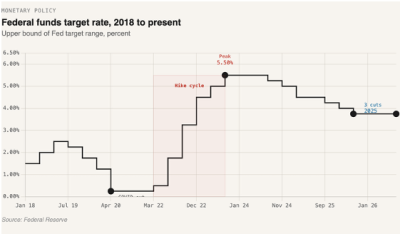
The Fed’s mandate requires the central bank to focus on the long term, even if the actions it takes cause short-term pain. Right now, Powell is operating under that same mantra. Just how “painful” this now three-year stretch has been is subjective. The housing market would argue it’s been very painful. The bond market has taken a beating, though it’s recovered somewhat recently. Equities, on the other hand, seem to have moved on from the pain brought on by Fed policy and decision-making.
We are now entering a period where the Fed’s game plan could be flipped: decisions made for short-term gain may come with long-term costs. While the media has fixated on the drama around Powell potentially being fired, the real question is whether he will remain on the seven-member Board of Governors through January 2028.
The Treasury, FHFA, and the administration have been increasingly vocal in urging Powell to lower rates. That pressure may appear rooted in near-term rate fixation, but Powell’s influence could become even more meaningful as a board member after a new chair is appointed. Why? Because it’s becoming more evident that the next chair will likely cut rates, steepening the yield curve and delivering short-term relief for a government increasingly reliant on issuing new debt. But the long end of the curve isn’t likely to react favorably, which would keep mortgage rates elevated despite Fed easing.
Two of the Fed’s formerly hawkish members, Waller and Bowman, have taken notably dovish turns this year. Waller is calling for a cut in July and has floated the idea of the Fed buying more bills to make the balance sheet more “balanced.” Bowman moved quickly on banking regulation changes that would help Treasury issuance flow more smoothly through the financial system. Once a new chair is in place, the number of doves will likely grow, reinforcing the trend toward short-term policy gain over long-term discipline.
Powell isn’t expected to say anything groundbreaking at this week’s announcement, but how he handles the pressure, internally and externally, will be key going forward. The more interesting Fed moment may be the Jackson Hole Economic Policy Symposium at the end of August. That’s likely when the updated review of the Fed’s monetary policy framework will be revealed, giving us a clearer sense of how the Fed is looking at data and applying it to decisions. It wouldn’t be surprising if the Fed formally moves away from a strict 2 percent inflation target in this new framework. If that happens, expect a resurgence in bond vigilante narratives, taking us right back to to long-term pain.

Leave a Reply